


J-Novel Club
M12 Media
If you enjoy Japanese light novels or manga and want a reading app focused specifically on that world, J-Novel Club is worth a careful look. I found it more specialized than a general ebook reader, which is both its main attraction and its biggest limitation. It is designed around discovering and reading J-Novel Club’s own catalog rather than acting as a universal bookshelf for every publisher.
The app sits in the Books & Reference category and comes from M12 Media. It is free to install, carries a Teen content rating, and has passed the point where it feels like an experimental niche release: more than one hundred thousand people have installed it. Its average rating is 3.4 from roughly three hundred fifty ratings, so the public response is mixed rather than universally enthusiastic. That matches my impression: the reading idea is appealing, but the experience depends heavily on whether the available catalog and app flow suit your habits.
What to expect before you begin reading
J-Novel Club is best understood as a dedicated doorway into light novels and manga, not as a replacement for Kindle, Kobo, Google Play Books, Apple Books, or a library app. Those broader services are usually better when you already own books from several publishers and want one place for them. This app makes more sense when your priority is finding titles associated with J-Novel Club and following that particular publishing ecosystem.
The store summary describes the experience as light novels and manga at light speed, but I would not interpret that as a promise that every book will suit every reader. The real value is concentration. Instead of searching through a huge general bookstore where niche Japanese fiction can be difficult to separate from unrelated results, you begin in an environment built around the format. That makes browsing feel more purposeful, especially if you already know you like translated light novels, fantasy series, romance stories, or manga with a similar audience.
The app is free, although it includes purchases ranging from about eight dollars to fifty dollars for an individual item. That distinction matters before you start browsing. Installing the app does not mean the whole catalog is automatically available at no cost. I recommend treating the free download as an opportunity to inspect the reading environment and discover titles before deciding where you want to spend money.
Related News

Why WhatsApp Messenger Still Makes Everyday Communication Feel Easy

Jurassic World: The Game Is the Better Dino Tycoon for Strategic Players

Threads in Real Life: Who Should Join, Lurk, or Leave

How SHEIN Turned Shopping Into an Endless Content Feed

How to Make Fortnite Feel Smarter on Mobile

Should You Switch to Microsoft Outlook on Mobile?
Because the age rating is Teen, parents and younger readers should not assume that every title will be suitable for children. A Teen label is a useful general signal, but it is still sensible to consider the tone and themes of each novel or manga for the person who will be reading it. Adult readers who are comfortable with a broad range of serialized Japanese fiction should find the rating unsurprising.
One practical expectation is that this is a catalog app as much as a reading app. Your first useful session may involve browsing, opening descriptions, and deciding which series deserves your attention rather than immediately finishing a chapter. That is not wasted time. With a specialized service, choosing the right title is part of the experience, and it helps prevent an impulse purchase that you later abandon.
Who will get the most from it
I would recommend trying it if you want a focused place to explore light novels and manga, especially when you prefer discovering series through a publisher-centered catalog instead of manually searching a general bookstore. It is also a reasonable option for readers who like to keep their fiction interests separate from work documents, textbooks, and unrelated ebooks.
Gallery
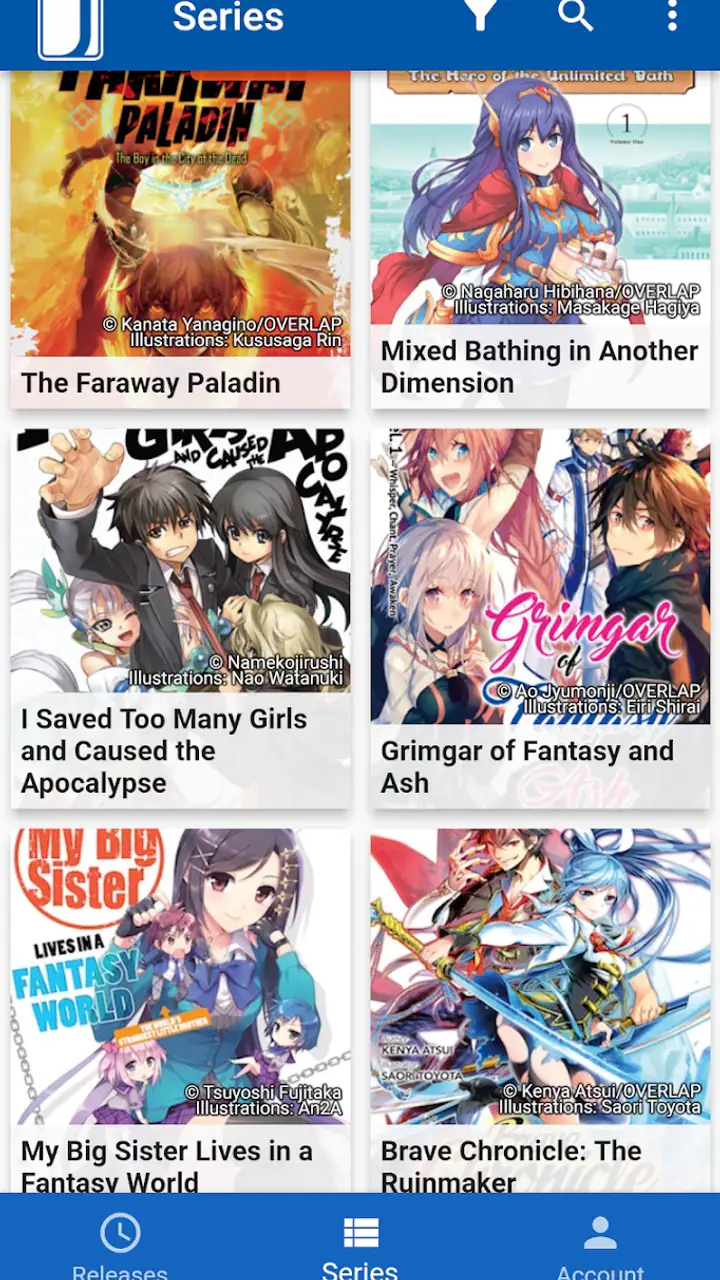
I would be more cautious if you expect a fully universal reading library. If your main goal is to import EPUB files, combine books from many stores, or manage a large collection purchased elsewhere, a dedicated ebook reader or a broader bookstore app will probably be a better fit. J-Novel Club’s appeal comes from its specialization, so that same specialization can feel restrictive when your reading life extends far beyond its catalog.
Getting started without making the first session harder
After installing the app, I suggest resisting the temptation to explore every visible option at once. Start with one question: do you want a light novel, manga, or simply a new series to investigate? That small decision gives your first session direction. A focused search is more useful than scrolling aimlessly through a catalog full of unfamiliar names.
When a title catches your eye, read its description with the same care you would use in a physical bookstore. Look for the premise, the tone, and whether it appears to be part of a continuing series. Light novels can be a poor match when you expect a complete story in one sitting, while manga may be preferable when visual storytelling is the reason you opened the app. Choosing based on format first is one of the easiest ways to avoid disappointment.
My recommended setup routine is simple:
Browse until you find two or three titles that genuinely interest you rather than selecting the first attractive cover.
Open each description and compare the premise with the kind of reading mood you have today.
Choose one title as your test read and pay attention to how comfortably you can move through the text or panels.
Only then consider spending money on a title or continuing deeper into a series.
This approach is especially useful because the app is free to try, while individual purchases can become significant if you buy impulsively. I would rather spend a few minutes checking whether the writing style, translation, pacing, and format work for me than commit to a long series based only on its cover art.
The current version is 3.4.1, and it supports devices running Android 7.0 or later. That makes it accessible to people using older Android hardware, although access to an older operating system does not automatically guarantee the smoothest experience on every device. If your phone has a small screen, manga pages may be less comfortable than on a tablet, and long novel sessions may make a larger display more appealing.
One useful habit is to decide where this app belongs in your reading routine. If you usually read during a commute, test it in the same position and lighting you normally use. If you read at night, check whether the interface feels comfortable for longer sessions. A reading app can look perfectly acceptable during a quick store visit but become tiring when you use it for several chapters.
Your first meaningful success
For a first-time user, success should not mean buying the most expensive-looking series or building a large library immediately. I consider the first real success to be finding one title that you can open, understand, and continue reading without feeling lost in the catalog. That gives you a reliable answer to the most important question: does this app fit the way I actually read?
Try a short, intentional session. Search or browse for a story that matches a genre you already know, open it, and read enough to judge the presentation rather than just the premise. Notice whether the page feels easy to follow, whether the text size works for your screen, and whether the transition between browsing and reading feels natural. These are more valuable tests than simply counting how many titles appear in the catalog.
A realistic everyday example would be a reader who has fifteen minutes before an appointment. Instead of opening a general bookstore and sorting through unrelated recommendations, that reader can use J-Novel Club to look specifically for a light novel or manga, inspect a few descriptions, and begin a focused reading session. The app is most convincing in that situation: the niche focus reduces the amount of searching required.
Another good workflow is to use it as a discovery tool before making a larger commitment elsewhere in your reading plans. If you are unsure whether a particular kind of translated fiction suits you, sampling the app’s environment can help you identify the styles and series you want to pursue. The trade-off is that discovery is only useful when you are prepared to check the purchase details before treating a title as part of your permanent library.
I also recommend keeping your first purchase deliberately modest. The available item prices can reach around fifty dollars, so a first-time user should not confuse enthusiasm with certainty. Begin with the title you are most confident about, learn how the app handles your reading routine, and then decide whether the catalog deserves a larger share of your budget.
Where new users can get confused
The first common misunderstanding is the difference between a free app and free reading. The installation costs nothing, but the app also offers paid items. I would approach it like a free storefront and reader: browse first, inspect what is available, and assume that some content may require a purchase rather than expecting the entire catalog to be unlocked.
A second source of confusion is the relationship between manga and light novels. They are related interests, but they create very different reading experiences. Manga depends on panel flow, artwork, and screen size. Light novels demand more sustained text reading and may be better suited to readers who enjoy prose, description, and longer sessions. If the app feels less satisfying than expected, the problem may be that you selected the wrong format for your current mood rather than that the app itself failed.
Series structure can also make a specialized catalog feel less straightforward than a single-book store. Before buying, I would check whether the title is part of a continuing story and whether you are looking at the beginning of that story. Starting in the middle is an easy mistake when several volumes or related entries appear close together. A few seconds spent confirming the starting point can save you from paying for a reading experience that feels confusing.
Another point worth remembering is that a store rating is not a personal compatibility score. The app’s average sits at 3.4, based on around three hundred fifty ratings, with roughly fifty-six written reviews. That tells me the experience has attracted both satisfied and disappointed users, but it does not predict whether the catalog matches your tastes or whether your phone will feel comfortable for reading. I would use those figures as a reason to test the app yourself, not as a final verdict.
There is also a budget trap for dedicated fans. A specialized catalog can make it easy to keep adding “one more” title, particularly when you are already invested in a genre or series. Since individual in-app purchases range from about eight dollars to fifty dollars, I would keep a simple personal rule: choose a series deliberately, and avoid buying several unrelated items until you know how often you will actually read them.
How it compares with broader reading alternatives
Compared with a general ebook store, J-Novel Club feels more focused and less useful as an all-purpose library. A broad store wins when you want bestsellers, nonfiction, local publishers, or books you already own in another ecosystem. It may also be preferable if you want one account and one reading space for many unrelated formats.
Compared with a general manga app, this one is attractive when its catalog is exactly what you want, but less compelling if your interests are spread across several publishers. A manga-first service may provide a more specialized visual browsing experience, while a general ebook platform may handle novels from more sources. The right choice depends less on which interface looks better and more on where the titles you want are actually available.
Compared with reading in a mobile browser, a dedicated app should feel more intentional because the reading activity is separated from ordinary web distractions. However, browser reading can be more convenient for someone who does not want another app or who frequently switches between devices and services. I would choose J-Novel Club when I want a focused reading destination, not when I am trying to minimize the number of apps on my phone.
The strongest trade-off is therefore clear: specialization versus breadth. If you regularly search for light novels and manga connected to this catalog, specialization saves effort. If you mainly want a neutral bookshelf for every kind of digital book, the focus may feel like a boundary rather than a benefit.
Small habits that make the experience better
First, separate discovery sessions from buying sessions. Browse when you are curious, but purchase only after you have identified the exact series and format you want. This prevents the excitement of a new recommendation from turning into an expensive, poorly planned library.
Second, judge the app on your actual reading device. A phone can be convenient for short novel chapters, but manga deserves particular attention because page composition and artwork can become tiring on a small display. If you have access to a larger Android screen, compare the two before deciding whether this will become your main manga reader.
Third, use the app to refine your taste rather than merely collect titles. After trying a few descriptions, note what attracted you: a particular genre, a type of protagonist, a serious tone, or a lighter episodic style. That makes future browsing faster and helps you avoid buying a series simply because its cover resembles something you liked.
Finally, give yourself permission to stop using it if the catalog does not match your habits. A free installation does not create an obligation to stay, and a specialized app should earn its place on your device through repeated usefulness. If you mostly read books from other publishers, a broader alternative will likely serve you better.
My recommendation after using it
J-Novel Club is a sensible choice for a reader who specifically wants a focused home for light novels and manga and is comfortable treating the app as both a catalog and a paid reading destination. I like the clarity of its niche: it does not try to be every kind of book service at once. That focus can make discovery feel more relevant than it does in a general bookstore.
At the same time, I would not recommend installing it blindly for someone who simply wants a universal ebook reader. The mixed 3.4 average, the paid content model, and the specialized catalog all point to an app that needs a personal trial. Those are not automatic deal-breakers, but they make it important to test the reading flow and inspect titles before spending money.
My practical advice is to install the free app, choose one light novel or manga that genuinely matches your interests, and use that first session to evaluate comfort, catalog fit, and purchasing expectations. If that small test leads naturally to another reading session, the app has probably found its audience in you. If you leave still wishing for broader book support or a different kind of library management, a general reading service will be the better choice.
For me, the final verdict is cautiously positive: J-Novel Club works best when you want focused discovery, not universal book ownership. Go in with that expectation, keep your first purchase measured, and it can become a useful companion for exploring this particular corner of Japanese fiction.
FAQs for J-Novel Club
What is J-Novel Club, and what kind of content does it offer?
J-Novel Club is a digital reading platform focused primarily on Japanese light novels and related fiction. Its catalog includes fantasy, romance, science fiction, adventure, isekai, and slice-of-life stories, with new chapters often released while a series is still being translated. The service is designed for readers who want official English translations rather than relying on unofficial fan translations or delayed print releases.
Is J-Novel Club free to use, or do I need a subscription?
J-Novel Club offers some content that can be sampled for free, including previews and selected chapters, but full access generally depends on the membership or purchase options available for a particular title. A subscription may provide benefits such as reading premium parts, accessing new translations earlier, or receiving credits for buying books. Pricing and included features can change, so check the current plan details before subscribing.
Can I read J-Novel Club books offline on Android or iOS?
Offline reading depends on the official app’s current features and the access rights attached to your account or purchased content. In general, users should look for a download or offline-reading option inside the app rather than assuming every title is permanently available without an internet connection. Downloaded books may also remain protected by the platform and may require periodic account verification or app access.
Does J-Novel Club provide complete light novels or only serialized chapters?
The platform supports both ongoing serialization and completed digital volumes, depending on the title. Many books are translated and published in parts, allowing readers to follow new chapters before a complete volume is finished. Once enough material is available, it may be organized into a completed ebook or volume. Availability, release timing, and whether a series is complete vary from one title to another.
Is J-Novel Club worth downloading for readers who already use ebook apps?
J-Novel Club is especially worthwhile for readers interested in Japanese light novels, official English translations, and discovering series that may not yet be widely available through mainstream ebook stores. Its serialization-focused approach can make the experience feel more interactive, although some users may prefer a traditional one-time purchase model. Before downloading, consider the catalog, subscription costs, reading tools, and whether your favorite titles are supported.
Pros
- Official English translations of many Japanese light novels
- New chapters often arrive shortly after the Japanese release
- Subscription includes access to a large reading library
- Progress syncs across devices when using the same account
- Supports offline reading for convenient travel or commuting
Cons
- Most new chapters require an active subscription or premium points
- The catalog focuses mainly on niche light novel genres
- Some titles may leave the service after licensing changes
- Reading access and features can vary between web and mobile
- The app may feel less polished than larger mainstream reading platforms


